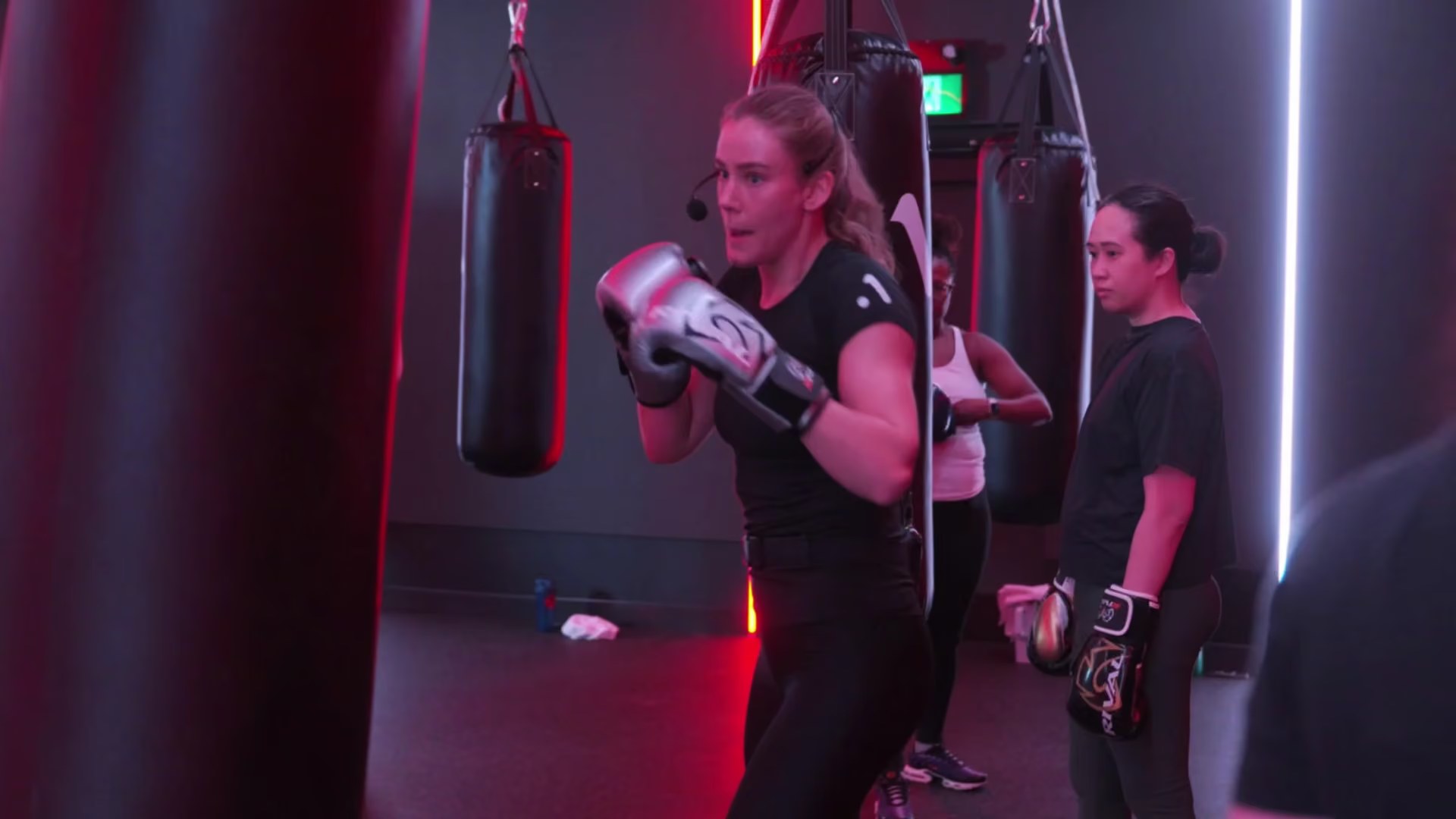
You love the energy of your HIIT classes and the strength you build from lifting, but you know your routine is missing something. You need a workout that focuses on stability, improves your posture, and targets all the smaller muscles that support your bigger lifts and explosive movements. This is where the barre workout comes in. It’s the ultimate complementary training session, designed to build a stronger foundation from the inside out. By focusing on core strength, balance, and flexibility, barre helps improve your performance in every other activity you do while also reducing your risk of injury. It’s the smart, strategic addition your fitness plan has been waiting for. Explore Altea membership options to access barre, Pilates, yoga, and more under one roof.
Key Takeaways
- Barre is a low-impact, high-intensity workout: It combines the best of ballet, Pilates, and yoga, using small, controlled movements to build lean muscle and improve your posture without stressing your joints.
- You don’t need to be a dancer to do barre: The workout is designed for all fitness levels, focusing on building functional strength and stability. Instructors offer modifications, so you can start right where you are.
- Focus on consistency, not perfection: Aim for two to three classes per week to see real changes in your strength and muscle tone. Just show up with comfortable clothes and grip socks, and trust the process; the results will follow.
What Is a Barre Workout?
If you’ve heard people talking about the long, lean muscles they’ve built from a workout that feels both graceful and intense, they were probably talking about barre. At its core, barre is a low-impact, high-intensity workout that sculpts your body using small, controlled movements. It’s designed to build strength, improve posture, and increase flexibility without putting stress on your joints. Think of it as the perfect blend of focused effort and fluid motion, all done in a supportive group setting. It’s a challenging workout that proves you don’t need to jump, lift heavy, or run for miles to get incredible results. Instead, it targets specific muscle groups with precision, working them to the point of fatigue to create visible tone and definition.
Where Barre Comes From
The inspiration for barre comes directly from the world of classical ballet. It adopts the fundamental principles of dance conditioning, using a stationary handrail (the “barre”) for balance and support. But don’t let the ballet connection fool you; this isn’t a dance class. Barre takes the focus on posture, alignment, and precise movements from ballet and transforms it into an accessible fitness method for everyone. The goal isn’t to become a dancer, but to build a dancer’s strength and physique. Try our reformer Pilates classes for another low-impact, muscle-sculpting workout. The best part? You don’t need any dance experience to get started. It’s all about embracing the technique to challenge your muscles in new ways.
The Mix: Ballet, Pilates, and Yoga
Barre is a true hybrid workout, borrowing the best elements from three powerful disciplines. From ballet, it takes the barre and the focus on lower-body strength and stability. From Pilates, it incorporates the emphasis on core engagement and small, controlled movements that create deep muscle activation. And from yoga, it draws on principles of flexibility and isometric holds, where you contract a muscle and hold it still. This unique combination makes every class a full-body experience. You’ll use the barre and your own body weight to perform high-repetition exercises that build endurance and tone every major muscle group, creating a balanced and sculpted physique.
What Are the Benefits of Barre?
Barre is much more than a ballet-inspired fitness class. It’s a comprehensive workout that delivers a unique combination of physical and mental benefits. By blending principles from Pilates, yoga, and ballet, barre creates a challenging yet low-impact experience that strengthens your body and sharpens your mind. The results go beyond the studio, helping you move with more grace, strength, and intention in your daily life. Whether you’re looking to build lean muscle, improve your posture, or find a moment of mental clarity, barre has something to offer.
How Barre Sculpts Your Body
The secret to barre’s effectiveness lies in its use of small, controlled movements. These isometric contractions, where you hold your body still while contracting a specific muscle, are designed to fatigue your muscles to the point of shaking. This process is what builds deep strength and improves muscular endurance without adding bulk.
Each class is a full-body workout that targets everything from your arms and core to your glutes and thighs. As you work through the sequences, you’ll also notice a significant improvement in your flexibility, balance, and posture. The constant focus on alignment and form helps you stand taller and move more efficiently long after you’ve left the barre.
More Than a Workout: The Mental Perks
While the physical results are impressive, the mental benefits are just as rewarding. The intense concentration required to maintain proper form and execute precise movements creates a powerful mind-body connection. This focus pulls you into the present moment, allowing you to tune out daily stressors and dedicate an hour entirely to yourself.
This form of moving meditation can help reduce anxiety and improve your overall sense of well-being. Leaving class, you’ll feel not just physically stronger but also mentally refreshed and centered. It’s a workout that strengthens you from the inside out, giving you a feeling of accomplishment and calm that carries you through the rest of your day.
Is Barre Right for You?
So, you’re intrigued by the promise of a sculpted physique and improved posture, but maybe you’re wondering if you’ll fit in at the barre. Perhaps you’re thinking, “I’m not a dancer,” or “I’m not flexible enough.” Let’s clear the air. Barre is one of the most adaptable and inclusive workouts available, designed to meet you exactly where you are. It’s not about your background in dance or your ability to do the splits; it’s about building strength, stability, and confidence, one pulse at a time. Before you count yourself out, let’s look at why barre is truly for every body and bust some of the most common myths that might be holding you back.
Why Everyone Can Do Barre
One of the best things about barre is its low-impact nature, which makes it accessible to almost everyone, regardless of age or current fitness routine. The movements are controlled and precise, focusing on strengthening muscles without putting stress on your joints. You don’t need any dance experience to get started. Barre workouts are designed for people of all fitness levels, with a focus on functional strength, flexibility, and balance, not perfect technique. And while classes are often popular with women, men can absolutely benefit from the unique challenge barre provides. It’s a fantastic way to build core strength, improve posture, and target muscles that are often overlooked in traditional weight training.
Busting Common Barre Myths
Let’s tackle a few common misconceptions. First, the idea that barre isn’t a “real” workout. While the movements are small, they are incredibly effective at creating deep muscle fatigue, which leads to toned, lean muscles. You will feel the burn. Another myth is that you won’t break a sweat. While some classes are slower-paced, many incorporate cardio elements to get your heart rate up and leave you feeling energized. Barre is also an incredible complement to other training styles, as it focuses on the stabilizing muscles that support you in higher-impact activities like running or HIIT, helping to improve performance and prevent injury.
Your First Barre Class: What to Expect
Walking into any new fitness class can feel a little intimidating, but barre is designed to be welcoming. The vibe is focused and high-energy, but not competitive. It’s all about you, your mat, and the burn. Forget complex choreography; the focus is on small, controlled movements that isolate specific muscle groups. You’ll likely feel your muscles start to shake during class, and that’s a good thing. It means you’re challenging them in a new way and building strength.
Your instructor will guide you through every step, offering encouragement and adjustments to your form to make sure you’re getting the most out of each movement safely. The goal isn’t perfection on day one. It’s about showing up, trying your best, and leaving feeling stronger and more accomplished than when you walked in. At Altea, our instructors are experts at making beginners feel right at home, so you can focus on your workout without any guesswork.
The Flow of a Typical Class
Most barre classes follow a consistent structure, making it easy to get into the rhythm after just a few sessions. A typical class lasts 45 to 55 minutes and starts with a dynamic warm-up to get your blood flowing and muscles ready. From there, you’ll move into an upper-body series using light weights to sculpt your arms, shoulders, and back. The majority of the class happens at the barre, where you’ll work through a series of exercises to target your thighs and glutes. Expect lots of pulses, holds, and tiny movements that create a serious burn. Finally, you’ll finish on the mat with core work and a well-deserved cool-down stretch.
The Gear You’ll Use
You don’t need to bring much besides yourself and a positive attitude. We provide all the equipment you’ll need, which usually includes a set of light hand weights (think two to five pounds), a small exercise ball, and a resistance band. The star of the show is, of course, the ballet barre, which you’ll use for balance and support during the leg-focused parts of the class. If you ever feel like the weights are too much, you can always put them down. Many of the arm exercises are just as effective when you simply create your own resistance by squeezing your muscles through the movements.
Finding Your Footing (and Form)
Let’s clear up a common misconception: you do not need any dance experience to do barre. While it’s inspired by ballet, barre is a fitness class, not a dance class. The focus is on strength, posture, and stability, not on grace or pointing your toes perfectly. Barre is a workout for all fitness levels, and your instructor is there to help you find the right form. They’ll offer hands-on adjustments and verbal cues to ensure you’re positioned correctly. They will also provide modifications for every exercise, so you can scale the intensity up or down to match your ability. Just listen to your body, follow the instructor’s lead, and you’ll be set.
Barre vs. Other Workouts
You might notice that barre shares some DNA with other workouts you love, like Pilates and yoga. While there are similarities, barre carves out its own unique space in the fitness world by blending different elements to create a one-of-a-kind, full-body experience. Understanding the key differences can help you see how barre can complement your existing routine or become your new favorite way to move.
Barre vs. Pilates
At first glance, barre and Pilates seem quite similar. Both emphasize small, controlled movements that build core strength and improve posture. The main difference lies in the execution and rhythm. Barre classes use a ballet barre for balance while you perform high-repetition, isometric exercises that fatigue your muscles. This focus on stabilizing muscles helps build endurance for other, higher-impact workouts. Pilates, on the other hand, often uses specific apparatus like the Reformer or mat work to build strength from your deep core muscles outward, with a strong focus on the core principles of Pilates like concentration and breath.
Barre vs. Yoga
Like yoga, barre is fantastic for improving your balance and flexibility. Where they diverge is in their energy and focus. Yoga classes typically flow through a series of poses, linking movement with breath for a practice that can feel both physical and meditative. Barre is more musically driven and energetic, combining elements of strength training and cardio with its flexibility work. While the movements are inspired by ballet, you don’t need any dance experience. The goal isn’t perfect technique; it’s about using those positions to build strength and challenge your body in new ways, making it accessible to all fitness levels.
The Unique Edge of Barre
So, what truly sets barre apart? It’s the ultimate hybrid workout. Barre is intentionally designed to be a full-body session that integrates cardio, strength training, and flexibility all in one class. The low-impact, high-intensity format makes it a safe yet incredibly effective way to build long, lean muscles and improve your coordination. By regularly doing barre, you’ll notice an increase in your overall flexibility and a better sense of balance. It’s an efficient and powerful workout that targets muscles you might not typically engage, delivering a complete and challenging experience every time you step up to the barre.
Overcoming Beginner Hurdles
Starting any new workout can feel a little intimidating, and barre is no exception. Thoughts like “Am I flexible enough?” or “Will I be able to keep up?” are completely normal. The good news is that barre is designed to be incredibly welcoming for newcomers. Let’s walk through some common concerns and how you can feel prepared and confident walking into your first class.
Nailing the Form and Feeling Confident
Many people think you need the grace of a ballerina to do barre, but the workout focuses on strength and balance, not perfect dance technique. The small, controlled movements are new for most people, so don’t worry if it feels unfamiliar at first. Your instructor will guide you through every position, and they’re always there to help you make small adjustments. Barre classes also include stretches to help you build flexibility over time. If a certain move feels too intense, there are always modifications available to accommodate every fitness and flexibility level. The goal is to challenge your muscles, not to force your body into uncomfortable positions.
Finding Your Pace
You might be wondering if you’ll be dripping sweat or if the class will feel too slow. The answer is: it depends! Some barre classes are designed with a slower, more controlled pace that focuses on deep muscle engagement, while others pick up the speed to get your heart rate up. Both styles are effective. The most important thing is to listen to your body. Take breaks when you need them and focus on your own progress. It’s not about keeping up with the person next to you; it’s about finding the pace that works for you and getting stronger with every class.
How to Feel at Home at the Barre
Let’s clear this up right away: you absolutely do not need any dance experience to join a barre class. These workouts are built for people of all fitness backgrounds. To feel more comfortable, try arriving a few minutes early to your first class. You can introduce yourself to the instructor, let them know you’re new, and find a spot at the barre where you have a clear view. At Altea Active, our community is built on support and encouragement. Everyone in that room was a beginner once, and you’ll find a welcoming environment to start your journey.
How Often Should You Do Barre?
Let’s get straight to it: the ideal frequency for barre depends entirely on your goals, your current fitness level, and how it fits with your other workouts. There isn’t a single magic number that works for everyone. The good news is that because barre is low-impact, you can do it more often than high-intensity training without burning out or putting excessive stress on your joints. Consistency is what creates those long, lean lines and deep core strength that barre is famous for, so finding a sustainable pace is more important than pushing for a specific number of classes per week.
Think of it less as a rigid prescription and more as finding your personal rhythm. For some, barre is the main event, their go-to workout for building strength and flexibility. For others, it’s the perfect complement to heavy lifting or long runs, helping to improve stability, posture, and prevent injury. This is where a holistic approach really matters. Instead of trying to figure it all out on your own, having a clear path makes all the difference. At Altea, we help you build a personalized plan that integrates barre seamlessly into your week. We take the guesswork out of it, making sure every pulse and plié moves you closer to your goals in a way that feels balanced and energizing. It’s about making barre work for you and your lifestyle.
Finding Your Weekly Rhythm
If you’re just starting, aim for two to three barre classes a week. This gives your body enough time to adapt to the new movements while still building momentum. You’ll learn the fundamentals of the technique and start seeing changes in your posture and muscle tone without feeling overwhelmed. Because barre is designed for people of all fitness levels, you can adjust the intensity to match your energy on any given day, which is perfect for those just getting started.
As you get stronger, you might increase your frequency to four or even five times a week, especially if it’s your primary form of exercise. If you’re using barre to supplement other activities like running or strength training, one or two classes a week is a fantastic way to improve your flexibility, balance, and core strength. The most important thing is to listen to your body and find a schedule that feels both challenging and sustainable.
Making Barre a Habit
The key to getting results from barre isn’t about going all-out for one week; it’s about consistency. Showing up two or three times every single week will do more for your body and mind than an intense but sporadic schedule. The best way to make it a habit is to find a class you love and schedule it into your week like any other important appointment. When it’s part of your routine, it becomes something you look forward to, not a chore.
Barre is also easy to stick with because it complements other forms of exercise so well. It focuses on the small stabilizing muscles that support your larger muscle groups, which helps build endurance for higher-impact workouts and reduces your risk of injury. By making barre a regular part of your routine, you’re not just sculpting your muscles; you’re building a stronger, more resilient foundation for every other physical activity you do. It’s a smart, effective practice that pays off in the long run.
What to Wear and Bring to Barre
Walking into a new fitness class can feel a little intimidating, but knowing you have the right gear makes all the difference. The good news is that preparing for barre is simple. The focus is on comfort, flexibility, and safety, so you can direct all your energy toward the workout itself. You don’t need fancy equipment or specialized apparel to get started. Just a few key items will have you feeling confident and ready to pulse, plié, and hold your own at the barre.
The Right Clothes and Footwear
For barre, think comfort and function. You’ll want clothing that moves with you through every tiny pulse and deep stretch without getting in your way. Most people opt for fitted workout wear like leggings or biker shorts paired with a comfortable tank top or sports bra. The goal is to wear something that allows you and your instructor to see your form clearly. The most important part of your outfit, however, is what’s on your feet. You’ll need a pair of grip socks. These aren’t your average athletic socks; they have small rubber or silicone grips on the bottom to prevent you from slipping on the studio floor. This is essential for maintaining stability and executing moves safely.
What to Bring to Class
You can leave most of your gym bag at home when you head to one of our barre classes. We provide all the equipment you’ll need, including the ballet barre, light hand weights, resistance bands, and exercise balls. All you really need to bring is a water bottle to stay hydrated and a small towel if you tend to sweat. With these essentials in hand, you’re fully prepared for your first class. We’ll take care of the rest, creating an environment where you can focus completely on your workout, connect with your body, and discover just how strong you are.
Find Your Barre Class at Altea
Ready to give barre a try? At Altea, our barre studio is a place where you can build strength, find your balance, and connect with your body in a whole new way. We know that starting something new can feel intimidating, so let’s clear up a few things. You don’t need a dance background, and you definitely don’t need to be flexible to start. Our classes are designed for people of all fitness levels, focusing on controlled movements that build muscle and improve posture.
Our expert instructors are there to guide you through every step, offering modifications to match your ability. Whether you’re a seasoned athlete or just beginning your fitness journey, you’ll find a welcoming and supportive environment. And yes, everyone is welcome. While barre is popular with women, our classes are for anyone looking for a challenging, low-impact workout. The goal isn’t perfection; it’s progress. With consistent practice, you’ll notice improvements in your strength, flexibility, and coordination.
What makes the barre experience at Altea unique is how it fits into your complete wellness plan. It’s one of our many boutique studios available under your single membership. You can pair a barre class with a strength session in the main gym, a cycle class for cardio, and finish with a session in our hydrotherapy pools. It’s all here. We take the guesswork out of your routine so you can focus on showing up and getting results. Find your local Altea club to see the class schedule and discover how barre can fit into your life. Check out our group fitness classes and join Altea to experience barre in a premium setting.
Frequently Asked Questions
Do I need to be a dancer or really flexible to start barre? Not at all. This is probably the biggest myth about barre. The workout uses a ballet barre for support, but it’s a fitness class, not a dance class. The focus is on building strength through small, controlled movements. As for flexibility, that’s something you’ll build over time. The class is designed to meet you where you are, and your instructor will offer modifications to ensure you feel successful and challenged, not overwhelmed.
What kind of results can I realistically expect? With consistent practice, you can expect to see and feel some incredible changes. Barre is fantastic for creating toned, defined muscles without adding bulk. The high-repetition, low-weight movements build muscular endurance and deep strength. You’ll also likely notice you’re standing taller, as the constant focus on alignment works wonders for your posture. Beyond the physical, many people find their balance and mind-body connection improve significantly.
I already lift weights and do HIIT. How would barre benefit me? Barre is an amazing complement to high-impact training. While lifting and HIIT are great for building power, barre targets the smaller, stabilizing muscles that support your larger muscle groups. Strengthening these muscles can improve your form in other workouts, increase your endurance, and help prevent injuries. It’s a low-impact way to build strength and flexibility, giving your joints a break while still challenging your body in a completely new way.
Is barre effective for weight loss? Barre can be a great part of a weight loss plan. The workout builds lean muscle mass, and more muscle helps your body burn more calories, even when you’re at rest. While it’s not a high-intensity cardio session like a spin class, it does get your heart rate up and burns calories. For the best results, we recommend pairing barre with other activities like cardio and strength training, which is easy to do when it’s all part of your personalized plan.
How often should I take a barre class to see results? For most people starting out, two to three classes a week is a great rhythm. This gives your body time to recover and adapt while still being consistent enough to build strength and see progress. As you get stronger, you can adjust that frequency based on your goals and how you combine barre with other workouts. The most important thing is consistency, which is why finding a schedule that feels sustainable for you is the real key to success.