
If hard floors leave your knees aching or make a new routine feel intimidating, the pool can change the way exercise feels. Aquatic fitness uses the water to support your body while every push, step, and sweep creates useful resistance.
Explore aquatic fitness and pool amenities at Altea Toronto.
Aquatic fitness is a low-impact way to exercise in the water to build strength and heart health for beginners who want to avoid joint stress. This method lets you move for a long time without the pain you feel on land because the water helps hold up your body weight. Moving against the water helps you tone your muscles and get fit in a safe setting that protects you from the impact of hard floors. Experts say that water-based exercise offers physical and mental health benefits, especially for people with joint issues who need a safe way to stay active. Whether you swim laps or join a class, these workouts help you reach your goals without getting hurt while keeping your body feeling good.
Starting a new plan can feel hard if you do not know what to expect. You may wonder how these pool workouts are different from a standard gym class. To explore the basics of What is aquatic fitness? the path to better health begins with:
What is aquatic fitness?
Aquatic fitness is any type of workout that takes place in a pool. Unlike swimming laps, these moves often focus on standing upright. You might walk, jog, or lift weights while in the water. This style of training is a top choice because water-based exercise offers physical and mental health benefits for all levels. Whether you join a group or work out on your own, the goal is to use the pool to get fit. It is a simple way to stay active and feel good.
How water resistance works
The main force in this training is water resistance. Since water is much more dense than air, it pushes back against every move you make. Your muscles must work harder to move in a pool than they would on land. Facts show that water is more dense than air, which changes how you move and breathe. This push acts like a weight machine for your whole body. It helps you build strength and raises your heart rate without the need for heavy gym tools.
For many people, this work feels easier because the water keeps them cool. You can find these challenges in aquatic fitness classes that use the pool to push your limits. By moving in new ways, you can hit muscle groups that you might miss in a normal gym. This makes it a full body workout that is both hard and fun. It gives you a new way to test your strength each day.
The power of buoyancy
Buoyancy is the force that lifts your body up in the pool. This lift supports your weight and takes the stress off your bones. Many find that buoyancy reduces the impact on joints when compared to land sports. This is why people can often work out for longer in the water without the joint or muscle pain that comes from a run on a hard floor. It lets you move in ways that might feel tough or hurt in other places.
When you get in the pool, you may not stay flat. Some people float at an angle with their feet lower in the water. This is a natural pose that is great for most pool moves. By using this lift, you can focus on your form and keep going. Finding a club with great aquatic fitness facilities can help you use these forces to reach your goals. It is a smart way to start a new habit.
Why beginners choose low-impact water workouts
Water gives a natural lift that supports your weight. This makes aquatic fitness classes a smart pick for anyone new to the gym. When you stand in the pool, the water takes on most of your weight. This lowers the stress on your knees and hips. It is a big change from moves like running, which can be hard on your frame.
Protecting your joints with water
Many people find they can work out for a longer time in the pool. This is because water lowers the risk of muscle or joint pain. High-impact moves on land can lead to aches that stop you from reaching your goals. In the pool, you can push yourself without that same fear of hurt. This ease lets new members stick to their plans and keep coming back.
The Centers for Disease Control and Prevention note that water moves help people with joint issues. You can help how your joints work without making pains worse. This makes the pool a top choice for those who want to stay active but need to be kind to their bodies. It lets you build a strong base for your health without the risk of old pains flaring up.
Building full body strength
You do not need heavy weights to get a good workout in the water. Water is much more dense than air. This creates a natural push against every move you make. As you push and pull through the pool, you use many muscle groups at once. This helps you build tone and strength in a way that feels smooth. Every step or arm swing becomes a way to build your body.
- Water moves tone your arms and legs.
- Pushing through water builds a strong core.
- The density of the pool helps you gain lean muscle.
- Every motion works your heart and lungs.
Heart health also gets a boost in our aquatic fitness spaces. Moving in water makes your heart work harder to pump blood. This stays true even if your pace feels slow or easy. You may also find that your breathing changes. Because water is dense, it takes more time to breathe out when you are under the surface. This helps you build better staying power over time.
Boosting mood and trust in yourself
Starting a new path can feel scary, but the pool is a warm place to be. Many people find that water moves are more fun than land sports. This joy makes it easier to keep showing up each week. For many, the goal is just to show up for yourself. Whether it is for five minutes or a full class, each trip to the pool counts toward your goals.
Water also offers a private space to learn new skills. Since your body is mostly under the water, you can focus on your moves. You do not have to worry about others watching you work out. This helps you build the trust you need to try new moves and push your limits. It is a space where you can focus on your own growth without any stress.
Regular time in the water can also lower stress and help you feel better. Many people report that swimming helps them feel less anxious. It is a great way to clear your head while you hit your body goals, and our wellness and recovery amenities can help you recharge after your workout. Meeting new people on the same path also helps you stay on track with your work.
Which aquatic fitness class is right for you?
Picking the right class is the first step toward your goals in the pool. Water-based workouts vary by depth, speed, and focus. Some classes help you build strength with tools while others focus on steady movement for heart health. You can find a style that fits your needs, whether you want a low-impact start or a high-energy challenge.
Find your aquatic fitness match
Most clubs offer a mix of formats to keep your routine fresh and fun. Deep-water classes use belts to keep you afloat so you never touch the bottom. This type of aquatic fitness is great for your core because you must stay upright as you move. Shallow-water classes are better if you want to use the pool floor for extra stability during jumps or runs.
You can see how different class types compare in the table below to find the best fit for your level. Keep in mind that aquatic fitness classes vary by club and schedule. At Altea Active, we offer premium spaces like a 25-meter lap pool at our aquatic fitness facilities in Toronto.
| Class Type | Water Depth | Main Focus | Skill Level |
|---|---|---|---|
| Aqua Aerobics | Shallow | Heart health and rhythm | All levels |
| Aqua Strength | Shallow | Muscle toning with tools | Intermediate |
| Deep Water Fit | Deep | Core and low impact | Intermediate |
| Aqua Circuit | Mixed | High-speed stations | Advanced |
| Aqua Yoga | Shallow | Balance and calm | Beginner |
Mix formats for better results
Varying your workouts can help you stay on track and see more progress, just like mixing aquatic fitness with group fitness classes in Toronto. Mixing heart-heavy aqua aerobics with strength-based classes keeps your muscles guessing. This variety makes it more likely that you will enjoy your time in the water and keep coming back. People often find swimming and water exercise more fun than land-based workouts, which helps them stick to a routine.
Using different depths also changes how your body works against the water. Water is much more dense than air, so every move you make meets natural resistance. This helps you build muscle and improve your heart health without the hard impact of a gym floor. An integrated fitness and wellness membership gives you access to these classes along with other club perks.
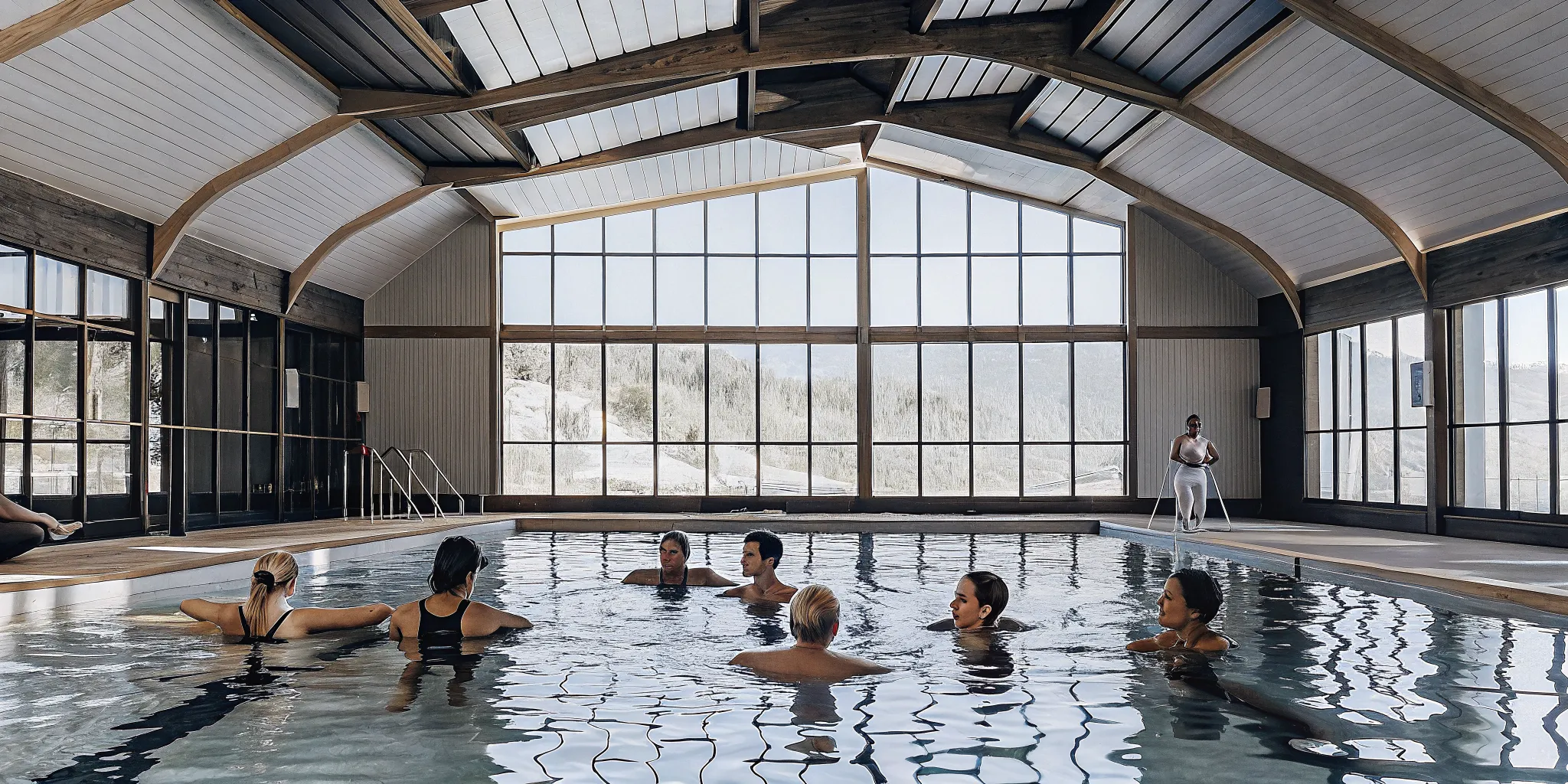
How do you prepare for your first water workout?
Getting ready for your first aquatic fitness class is mostly about feeling good in a new space. While the pool might feel different than a gym floor, the goals are the same. You want to arrive with the right gear so you can focus on your moves. Showing up a few minutes early helps you find your way and meet your teacher before the music starts.
Check the class details
Before you head out, read the class info on the club schedule. Some classes focus on fast heart work while others use slow moves for joint health. Knowing what to expect helps you pick the right aquatic fitness classes for your goals. If the class uses tools like foam bells or pool tubes, the club usually gives them to you. You can view the full schedule and pool list at aquatic fitness classes.
Pack your pool bag
A good water workout starts with the right gear. Choose a suit that stays in place during jumps and arm swings. You might also want to bring clean water shoes to help with grip on the pool floor. Pack a towel, a water bottle, and soap for after the session. Since water gives low-impact buoyancy, you can work hard without joint pain. Just be sure to drink water throughout the hour.
Talk to your teacher
When you arrive, let the teacher know it is your first time. They can show you how to use the tools and ways to change moves to fit your level. This is a great time to talk about any old aches or health goals. Many people use these classes for rehabilitation of weight-bearing joints like the knees or hips. Your teacher can help you move safely and get the most out of our aquatic fitness facilities.
- Check the schedule: Look at the class type and power level online to make sure it fits your needs.
- Pack your gear: Bring a good suit, water shoes for grip, a towel, and a water bottle.
- Arrive early: Get to the pool deck 10 minutes before the start time to find your spot.
- Set up your space: Grab any tools you need like water weights or tubes as the teacher tells you.
- Start slow: Focus on your form and breath during the first few moves to get used to the water.
- Cool down: Follow the group through the last stretches to help your body rest after the work.
How can you adjust aquatic exercise intensity?
Aquatic fitness is very flexible. You can make your workout easy or hard by changing how you move in the pool. Water is much more dense than air. This gives you a natural push in every way as you move. You can use this to build strength and heart health at your own pace.
Change your speed and range of motion
One of the best ways to work harder is to move faster. In the water, the load grows as you gain speed. If you push your arms through the water twice as fast, it feels much heavier. This helps you burn more energy and build muscle. You do not need to add weights to feel the burn. Just moving your limbs quick can be a big challenge.
You can also change your range of motion. Small, quick moves are good for a light start. Large, full sweeps use more water and need more force. Try to reach as far as you can during each move. This makes the aquatic fitness classes at Altea a great choice for all levels. You can start slow and grow as you get stronger.
Use tools, surface area, and leverage
The shape of your hands changes how much water you move. If you slice your hand through the water like a knife, there is less drag. This makes the move easier. If you turn your palm flat and push, you move much more water. This adds a lot of force to your workout. It is a simple trick to help you find the right level of effort.
You can also use gear like webbed gloves, paddles, and foam tools. These tools make your hands bigger or add buoyancy that you must push against. The length of your arms and legs also affects the work. Keeping your arms straight as you move them through the water makes the exercise harder. This is because long limbs have to push more water. If you bend your elbows, the move becomes easier.
Adjust water depth and rest
Water depth also plays a big role in your workout. When you stand in deep water, the pool gives you more buoyancy. This buoyancy reduces the impact on your joints so you can exercise for a long time. But deeper water also means more of your body is under the surface. You have to push against more water as you walk or run through the pool.
Finally, look at your rest times. If you want a harder session, try to move for long blocks with short breaks. You can ask your coach for tips on how to push yourself. They can show you new ways to use the pool for your goals. Showing up for any session is the first step. It leads to an integrated fitness and wellness membership that works for your life.
How aquatic fitness works with strength and mobility
Many people think they have to choose between the gym and the pool. But aquatic fitness really helps you get more out of your other workouts. The water gives you a new way to build power while you protect your body. Since water provides buoyancy, it lowers the stress on your joints. This makes it a great partner for heavy lifting or high-impact sports. You can work hard in the pool without the same wear and tear you feel on land.
Using water to build power
When you move in a pool, the water pushes against you from every side. This force is much stronger than the air in a gym. It makes your muscles work harder during each move. You can use this to build a base of strength before you try heavy weights. For many people, the pool is a safe place to practice fast or big moves. You get the gains from the work but skip the risk of a hard fall or a joint injury, and personal training programs can help you transition between land and water workouts.
Using the pool for strength also helps your heart. You can keep your heart rate up for a long time while you tone your muscles. This builds the energy you need for long gym sessions. Research shows that people can exercise for longer in the water without extra pain (F003). Because the water keeps you cool, you may not feel as tired right away. This allows you to push yourself further in each class. Over time, this extra effort leads to real power that you can use in any sport, complementing your strength training at Altea Toronto.
Better joints and more reach
Mobility is how well your joints move through a full range of motion. In the water, you can often reach further than you can on land. This is very helpful if you have stiff joints or old injuries. Research from the CDC shows that water exercise helps people with arthritis move their joints better (F004). It also lowers pain so you can stay active for a longer time.
When you move better in the pool, it shows in the gym. You will find it simpler to do deep squats or reach over your head. This is because the water lets you stretch and move without the weight of your own body pushing down. It acts like a helper that holds you up while you work on your form. This makes it a top tool for anyone who wants to stay limber as they get older.
Your balanced weekly plan
A good fitness plan uses all the tools you have. You do not need to be in the pool every day to see a change. Even one or two pool classes each week can make a big difference. Here is a simple way to mix your workouts to get the best results:
- Monday: Weight lifting in the gym.
- Tuesday: Aquatic fitness for active rest.
- Wednesday: Rest or a light walk.
- Thursday: Hard gym session.
- Friday: Pool session for mobility and stretching.
- Saturday: Group class or a fun sport.
- Sunday: Full rest day.
This mix keeps your body fresh and stops you from getting too tired. The main part of any plan is just showing up. Whether you have 5 minutes or 50 minutes, staying regular is the key to hitting your goals. A combined fitness and wellness membership lets you switch between the pool and the gym with ease. This mix helps you stay strong, move well, and feel your best in our wellness club.
Where can you try aquatic fitness at Altea?
Altea gives you many ways to stay active, but not every club has a pool. Our pool programs are top-tier, but they vary by site. If you want to start a new routine, you should check what your local club has. This helps you find the right fit for your goals. It also helps you plan your time.
Clubs with aquatic centers
Now, our main pool services are in Ontario and Manitoba. Our Toronto club has a premium 25M lap pool for training and fun. You can visit the aquatic fitness facilities in Toronto to see the full list of pool perks. In Manitoba, members enjoy many group pool sessions. You can join aquatic fitness classes in Winnipeg to boost your heart health in a low-stress way. These sites use the power of water to protect your joints.
The Centers for Disease Control and Prevention say that water-based exercise helps people with long-term health issues. This includes those with heart disease or joint pain. Using a pool lets you move for a longer time without the muscle ache common with gym floor work. Because water is thicker than air, it adds a gentle push to every move. This builds strength while you keep a high heart rate.
Programs at other Altea sites
As Altea grows across Canada, our club perks continue to change. Sites like Ottawa and Vancouver offer great gym floors and small studios. But their pool options may differ from Toronto. Our new Edmonton club will also have its own set of tools. We build each site to serve its local area with the best health tools we can find.
If your local Altea does not have a pool, you can still find many ways to get a good workout. We offer over 400 weekly classes that range from yoga to hard drills. Our goal is to give you a full wellness world under one roof. This makes it easy to change your routine and keep your body fit. You can always find a new way to move at Altea.
How to start your aquatic journey
Checking the latest list of times is the best way to start. Class times and pool hours can change with the seasons or club events. Most clubs post their pool times on their site or mobile app. This lets you plan your visit and make sure a lane is free for your swim. It is a quick way to stay on track with your goals.
For those just starting, showing up is the most vital step. If you swim for ten minutes or fifty, staying steady leads to the best results. You do not need to be a pro to start. Many of our members find that integrated fitness and wellness membership options make it simple to try new things. You can move from the weights to the pool with no extra stress. This full approach helps you reach your goals with more joy. This makes Altea the best place to find your flow.
Frequently Asked Questions
Can you lose weight with aquatic fitness?
Yes, you can lose weight by doing aquatic fitness. Working out in the water burns calories and builds muscle. The water provides more push than air, which makes your muscles work harder. This helps you burn fat while being kind to your joints. For the best results, try to eat healthy foods and stay active most days of the week.
What types of medical conditions is aquatic fitness recommended for?
Aquatic fitness is often recommended for people with chronic health issues. According to the CDC, water-based exercise can help those with diabetes, heart disease, and arthritis. The water helps you float, which reduces the stress on your joints and helps you move more easily. It is also a good choice for people with fibromyalgia, as warm water can help lower anxiety and improve your mood.
How many days a week should you do water aerobics?
Most people should try to do water aerobics or aquatic fitness two to three times each week. This gives your body time to rest between classes while still helping you get fit. If you are a beginner, you might start with one class and slowly add more as you get stronger. Showing up often is the best way to see results, so find a plan you can keep.
What equipment is used in aquatic fitness classes?
Aquatic fitness classes use simple tools to help you get a better workout. You might use foam weights, kickboards, or pool noodles to add resistance in the water. Some classes also use water weights or gloves to help build strength in your arms and legs. Most clubs provide this gear for you, so you only need to bring a swimsuit and a towel to begin.
Ready to make a splash?
Aquatic fitness can bring a refreshing, joint-friendly challenge to your routine while complementing the strength, mobility, and recovery work you already enjoy. Explore current programming at a participating Altea club and choose a class that meets you where you are.
Explore aquatic fitness at Altea Toronto and discover our integrated fitness and wellness membership benefits.