
A Pilates class can look deceptively simple until your deepest core muscles begin to shake. When comparing reformer Pilates vs mat Pilates, the right choice is not the one that looks harder. It is the class that gives you the right mix of challenge, support, and instruction for how you want to move.
Explore Reformer Pilates classes at Altea Active.
Mat Pilates uses body weight and gravity to build control, balance, and core strength on a mat. Reformer Pilates uses a spring-loaded machine to add adjustable resistance or support. Both are low-impact, adaptable practices. Beginners can start with either one when an instructor offers appropriate progressions, while experienced participants can use both to create a more varied routine.
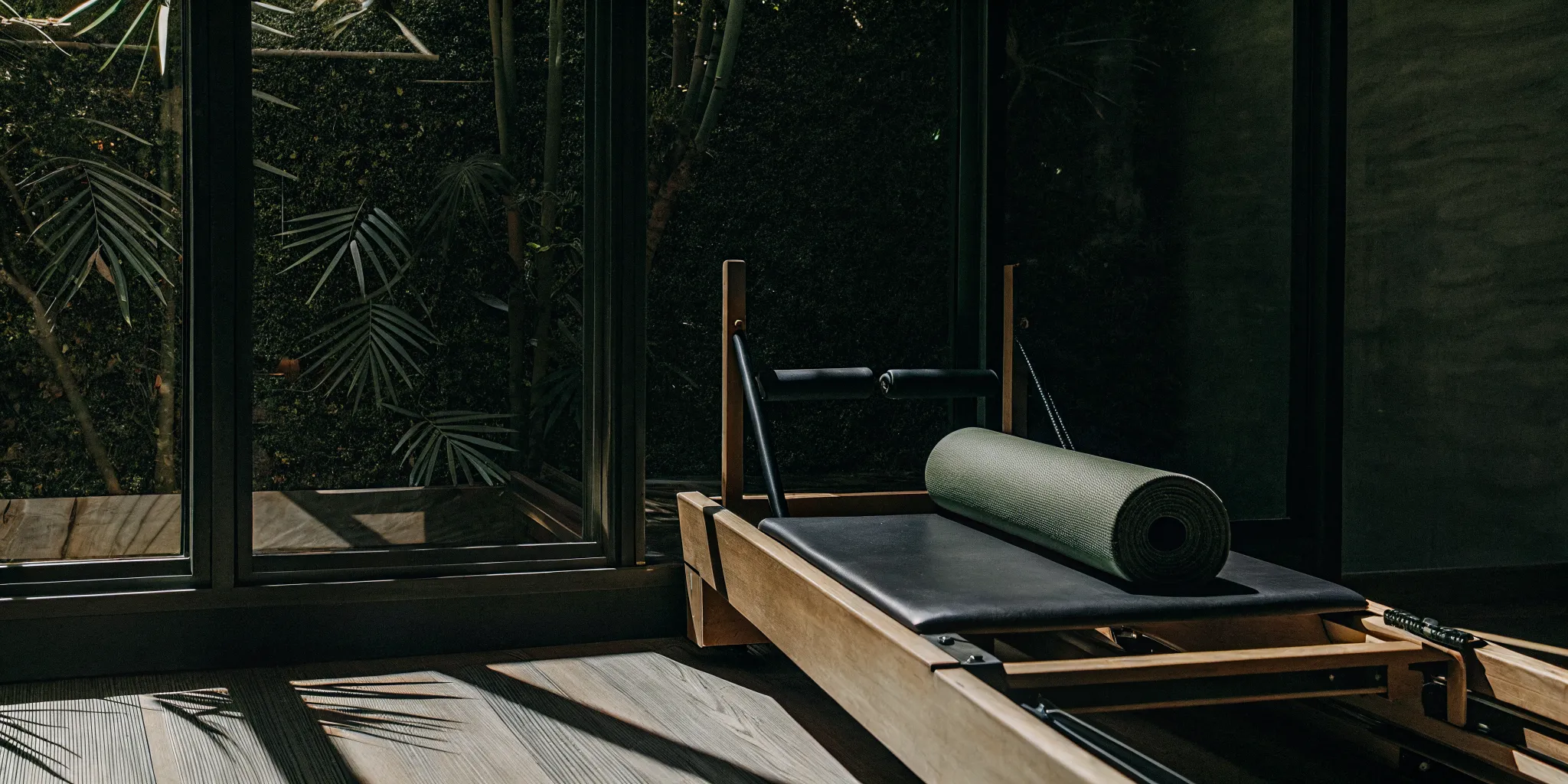
Reformer Pilates vs mat Pilates at a glance
The biggest difference is the equipment. Mat Pilates asks you to control your body against gravity, while reformer Pilates uses a moving carriage, springs, straps, and a footbar. The reformer can make a movement more supportive or more demanding depending on the spring setting and exercise.
| Feature | Mat Pilates | Reformer Pilates |
|---|---|---|
| Equipment | Mat, with optional small props | Spring-loaded reformer machine |
| Resistance | Body weight and gravity | Adjustable springs, straps, and body weight |
| Movement feedback | You create stability independently | The machine provides tactile feedback and guided pathways |
| Class feel | Grounded, focused, and easy to adapt | Dynamic, precise, and highly varied |
| Best fit | Learning foundational control and practising with minimal equipment | Progressive resistance, movement variety, and close equipment-based instruction |
Neither style is automatically easier. A simple-looking mat sequence can be intense because your body must create all the stability. A reformer can assist a movement, then increase its challenge with a different setup. The quality of your technique matters more than the equipment alone.
What makes Reformer Pilates different?
Reformer Pilates turns resistance into useful feedback. Springs create tension, the carriage responds to your control, and straps connect the upper and lower body to the machine. This combination helps participants notice whether they are moving smoothly, evenly, and with intention.
The reformer machine explained
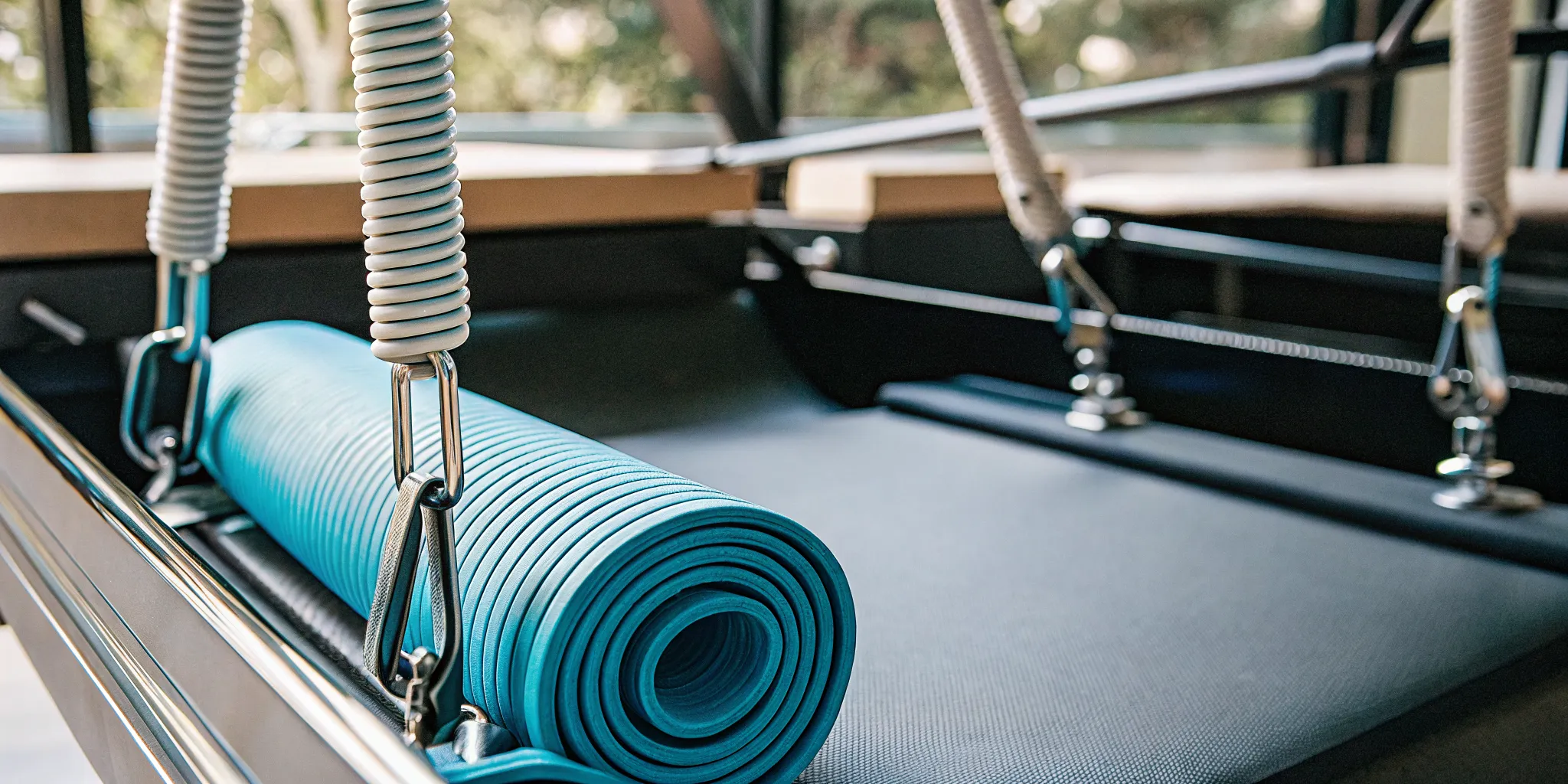
A reformer has a padded carriage that glides along rails. Springs connect the carriage to the frame and offer different levels of resistance. A footbar provides a surface to press against, while straps can support hands or feet. Instructors combine these features in seated, lying, kneeling, and standing exercises.
More spring tension does not always mean a harder workout. In some movements, heavier springs provide stability. In others, lighter springs demand more control because the carriage is less anchored. That is why instructor guidance is central to the experience.
Resistance that can progress with you
The reformer’s adjustable setup makes it useful for different goals. An instructor can modify range of motion, body position, or resistance to suit the participant and the purpose of the exercise. Over time, progress may mean stronger resistance, more coordination, slower control, or a more complex movement pattern.
At Altea Active, the Reformer Pilates experience includes beginner-friendly Foundations classes and open-level options that emphasize different areas of the body. Private and semi-private sessions are also available for people who want more personalized attention. Members can find Toronto Reformer Pilates classes at the 1 Bloor flagship club.
What can you expect from mat Pilates?
Mat Pilates places the focus on how you organize and control your body without a large machine. Classes use a mat and may add small props such as a ball, ring, or resistance band. The result is a focused practice that can be scaled from foundational movements to demanding sequences.
Core control without a machine
Your trunk must stabilize as your arms and legs move. That challenge can reveal where you rely on momentum or lose alignment. An instructor can help you slow down, connect your breathing to the movement, and choose a version that lets you maintain control.
Mat work also teaches skills that transfer to the reformer. Pelvic stability, rib positioning, breathing, and deliberate movement remain important in both settings. Learning those fundamentals can make every other workout feel more connected.
A flexible class experience
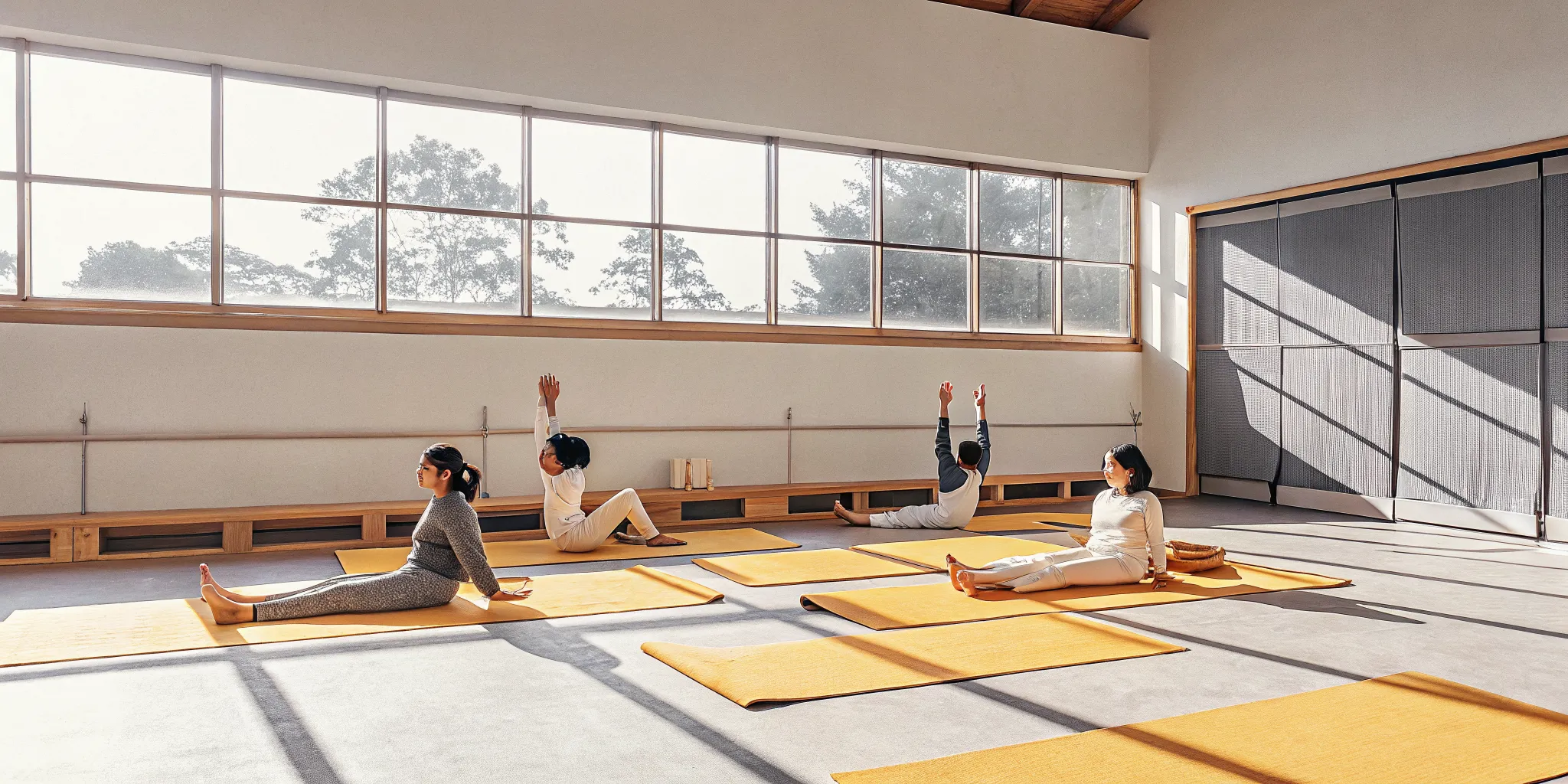
Because a mat class does not require one large machine per person, it can feel more open and communal. It is also easy to repeat familiar movements outside the studio once you understand their form. That accessibility makes mat Pilates a practical part of a balanced weekly routine.
Altea Active brings mat-based movement into a broader selection of boutique fitness classes. Members can combine Pilates with yoga, strength, cycle, and other formats without piecing together multiple studio memberships.
Is Reformer Pilates or mat Pilates better for beginners?
Beginners can start with either mat or reformer Pilates. The better first class is the one with clear instruction, beginner-appropriate progressions, and enough support to help you move confidently. Your comfort with equipment and your preferred learning style can guide the choice.
Choose mat Pilates if you want to learn the foundations
Mat classes introduce the essential language and movement principles of Pilates with minimal equipment. You learn how to engage your core, coordinate breath, and control your limbs against gravity. Those skills provide a valuable base for future mat or reformer sessions.
Choose reformer Pilates if tactile feedback helps you learn
The reformer’s straps, springs, and carriage give immediate physical feedback. Some beginners find that helpful because they can feel the pathway of a movement. A Foundations class is a sensible place to learn how the machine works before trying faster or more advanced formats.
If you are new to the equipment, Altea Active’s guide to Reformer Pilates for beginners explains what to expect and how to prepare. Tell your instructor about injuries, pain, pregnancy, or movement concerns before class so they can help you choose appropriate options.
Which style better matches your fitness goals?
Both styles can support strength, mobility, coordination, and body awareness. Your goal changes where the emphasis sits. Mat Pilates is ideal for building independent control with minimal equipment, while reformer Pilates offers adjustable resistance and an unusually broad range of exercises.
- For foundational core control: mat work teaches you to create stability using your body and gravity.
- For progressive resistance: the reformer’s springs make it easy to adjust the training stimulus.
- For movement variety: the reformer supports many body positions and exercise combinations.
- For convenient practice: familiar mat exercises can be repeated almost anywhere.
- For personalized instruction: private reformer sessions can offer focused guidance and tailored progressions.
A 2023 systematic review found evidence that Pilates can improve pain and disability in adults with chronic low back pain, although individual needs and program quality matter. Pilates is not a substitute for medical care. If pain or a health condition affects your movement, ask a qualified healthcare professional which activity is appropriate for you.
Explore Altea Active’s class selection and build a balanced weekly routine.
How do mat and reformer classes feel different?
Mat classes often feel grounded and internally focused. You use breathing, concentration, and body awareness to create precise movement on a stable surface. Reformer classes can feel more dynamic because the carriage moves and spring settings change from exercise to exercise.
The mat class experience
A mat class may flow through a sequence with everyone working in the same open studio space. You can expect deliberate movements, pauses to refine technique, and variations that change the challenge. The simplicity of the setup keeps your attention on form.
The reformer class experience
In a reformer class, each participant works at a machine while the instructor explains setups, spring choices, and transitions. The machine adds variety, but it also asks you to listen carefully and move with control. Small equipment-based classes can make it easier for an instructor to observe your form.
If you want more focused support, private Reformer Pilates sessions can help you learn the equipment, refine technique, and work toward personal goals at your own pace.
How to choose the right Pilates class for you
Start with your goals, not assumptions about which class is harder. Then consider how you like to learn, the support you need, and the experience you want from your workout. A thoughtful first choice makes it easier to build consistency.
- Define your priority. Decide whether you most want foundational control, adjustable resistance, movement variety, or a convenient practice.
- Consider your learning style. Choose mat work if you enjoy creating stability independently, or reformer work if equipment feedback helps you understand a movement.
- Pick an appropriate level. Start with a beginner or Foundations class when you are learning the method or the machine.
- Tell the instructor what matters. Share relevant injuries, pain, or movement concerns before class and follow any medical guidance you have received.
- Try both over time. Mat and reformer Pilates complement each other, so you do not need to choose one forever.
The most useful comparison is personal. Notice which class helps you understand your body, challenges you without sacrificing form, and makes you want to return. Consistency will matter more than chasing the most intense option.
Build a balanced Pilates practice at Altea Active
Altea Active makes it easier to use Pilates as one part of a complete wellness routine. Reformer sessions, mat-based classes, strength training, yoga, recovery amenities, and community all sit within one premium fitness and wellness ecosystem. Pilates classes are available at multiple locations, including Ottawa Pilates classes and Vancouver Pilates classes. You can change the mix as your goals and energy change.
That flexibility is the real advantage of comparing reformer Pilates vs mat Pilates. You can use mat work to sharpen control, the reformer to explore resistance and variety, and strength and conditioning services to round out your week. Review the full class selection to find options available at your club.
Frequently asked questions
Is reformer Pilates harder than mat Pilates?
Not always. Reformer Pilates can add resistance, but the machine can also support a movement. Mat Pilates may feel harder when your body must create stability without assistance. The exercise, level, and quality of your control determine the challenge.
Should beginners do mat Pilates before reformer Pilates?
Beginners do not have to start with mat Pilates. A beginner-friendly reformer Foundations class can teach the equipment safely. Mat classes are also an excellent way to learn core control, breathing, and alignment before or alongside reformer sessions.
Can mat Pilates build strength?
Yes. Mat Pilates uses body weight, leverage, tempo, and controlled movement to challenge muscles. Progressions can increase the demand without a reformer, especially when you maintain precise form instead of relying on momentum.
Can you combine mat and reformer Pilates?
Yes. The two methods complement each other. Mat Pilates develops independent control and accessible practice, while reformer Pilates adds adjustable resistance, tactile feedback, and movement variety.
How often should you do Pilates?
The best frequency depends on your goals, schedule, experience, and other activity. Start with a routine you can perform consistently and recover from comfortably. An instructor can help you balance Pilates with strength, cardio, mobility, and rest.
Find your next Pilates class
Whether you prefer the simplicity of the mat or the feedback of the reformer, the right class helps you move with confidence and keeps you engaged. Explore how Pilates can fit into a wider routine designed around strength, recovery, and everyday wellbeing.